After the Paris stock market closed on October 12, French luxury giant LVMH released preliminary results for the first nine months of fiscal 2026 ended September 30: total revenue declined 2% year-on-year to €57.148 billion, up 2% organically. Among this, third-quarter revenue was €18.504 billion, up 1% organically, slower than the 3% growth in the second quarter. The group stated that the organic growth in the third quarter reflected the impact of a "less buoyant" environment in China, while the United States, Europe and Japan achieved solid growth.
Revenue in Asia (excluding Japan), including China, declined 5% organically year-on-year in the third quarter. The region grew 7% and 4% in the first and second quarters of this year, respectively, and grew 2% in the third quarter of last year.
Cécile Cabanis said on the conference call that the Asian market in the third quarter was dragged down by a sharp deterioration in Chinese consumer confidence driven by macroeconomic factors, with discretionary spending significantly affected; the news flow in China this summer was not ideal, and the consumer "feel-good factor" deteriorated at the start of the quarter. Cécile Cabanis also noted that trends improved toward the end of the quarter, with September performing better than the quarterly average, including for the Chinese clientele (including overseas). "We hope (this situation) will fade, but we are not sure when; we will focus on what we can control, namely self-help initiatives." She believes that changes in China's consumption environment have delayed the recovery, "but there is no structural or specific factor that would prevent a recovery, it just needs more time."
The most affected was the Fashion & Leather Goods division (led by Louis Vuitton and Dior), whose third-quarter revenue declined 5% organically year-on-year, after just returning to organic growth (+1%) in the second quarter. In response to an analyst's question about the division, Cécile Cabanis disclosed that in the third quarter, demand from Chinese clientele for the division declined mid-teens, with domestic consumption in China down double digits and overseas consumption down mid-single digits; American clientele remained solid, growing mid-single digits.
It is worth noting that despite the slowdown, LVMH has achieved positive organic growth for five consecutive quarters: group revenue declined 4% organically year-on-year in the second quarter of 2025, and returned to growth starting from the third quarter of 2025.
Key Points of LVMH's Third-Quarter Results
Group level: Third-quarter revenue up 1% organically year-on-year, with currency effects turning positive
Regional level: Solid growth in the United States, Europe and Japan
Divisional level:
- Wines & Spirits achieved strong organic growth
- Fashion & Leather Goods saw good momentum from creative renewal, with Loro Piana performing strongly
- In Watches & Jewelry, the jewelry business performed strongly, with iconic collections continuing to succeed
- In Perfumes & Cosmetics, Parfums Christian Dior and Guerlain performed well, with successful innovations
- Sephora grew strongly, with good momentum across all regions and brands
Regional Performance
In the first nine months of the year, the U.S. market grew 4% organically year-on-year, Japan grew 5%, Asia (excluding Japan), including China, grew 3% year-on-year, and Europe was flat year-on-year.
In the third quarter, the United States, Japan and Europe grew 5%, 6% and 4% year-on-year, respectively, while Asia (excluding Japan) declined 5% year-on-year.
Cécile Cabanis said on the conference call that growth in Europe accelerated markedly in the third quarter (flat in the second quarter), with trends improving across all business divisions; growth in the United States and Japan was slightly above the year-to-date average, with U.S. trends relatively stable and Japan's fluctuations mainly due to large differences in year-on-year comparables across quarters.
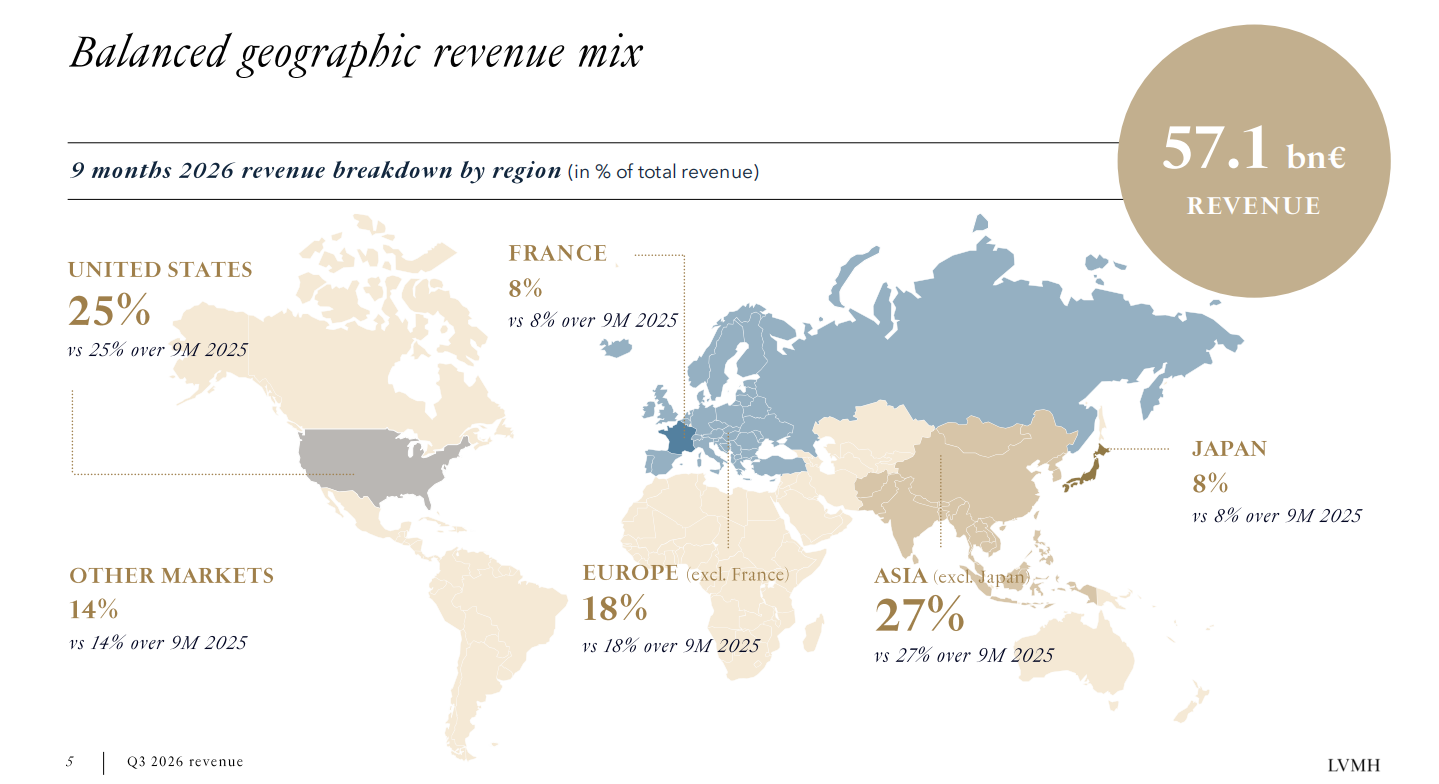
In terms of revenue share, the group's regional structure was exactly the same as the same period last year: the United States accounted for 25%, France 8%, Europe (excluding France) 18%, Japan 8%, Asia (excluding Japan) 27%, and other markets 14%.
Divisional Performance
——Wines & Spirits
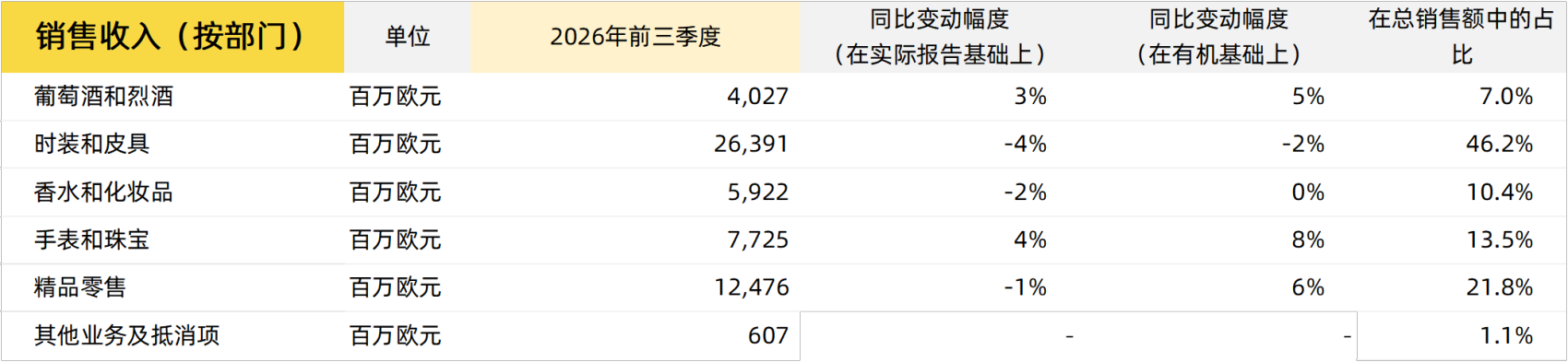
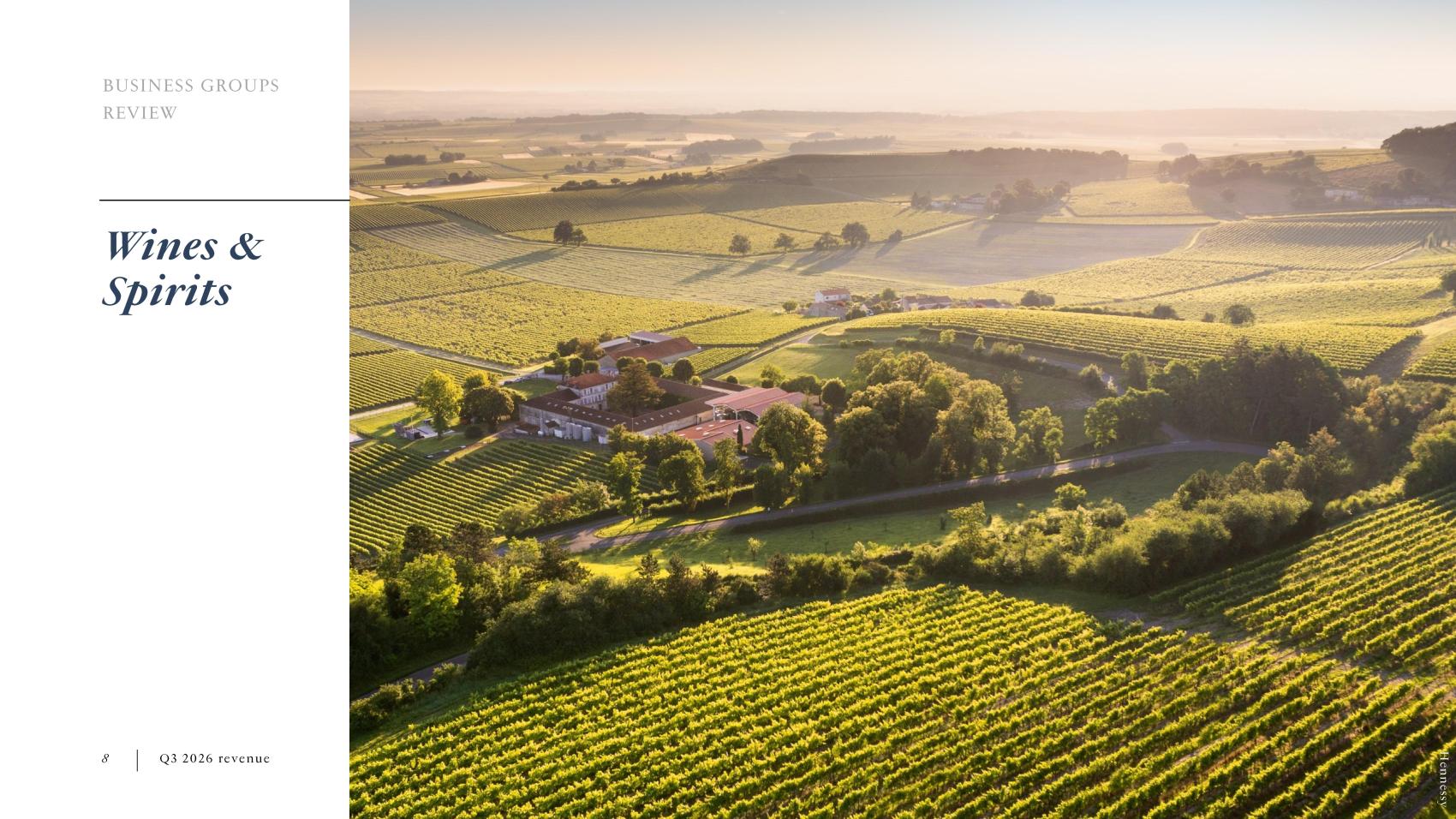
The Wines & Spirits business saw revenue grow 5% organically year-on-year in the first nine months to €4.027 billion (up 3% on a reported basis), with third-quarter organic growth of 6%. By category, Champagne and Wines revenue was €2.229 billion, up 6% organically; Cognac and Spirits revenue was €1.798 billion, up 4% organically.
Financial Communications Director Rodolphe Ozun said on the conference call that the group's major Champagne brands all achieved growth in the third quarter, with the continued leadership of Dom Pérignon and Krug driving a positive product mix effect; in the first nine months, the Champagne business achieved low-single-digit volume growth, with a similarly low-single-digit price contribution.
The Champagne business continued the signs of recovery observed since the start of the year, especially in Europe. Moët & Chandon maintained high visibility in its second season as the official Champagne of Formula 1. Rosé wines had good momentum, with Provence rosé continuing to make good progress; the new low-alcohol Chandon Spritz range was well received.
Hennessy Cognac had good momentum in Asia (especially China), while the U.S. market benefited from the launch of the new V.S. ready-to-drink cocktail range. Glenmorangie and Belvedere performed well and continued to innovate.
——Fashion & Leather Goods
The creative renewal of brands in the Fashion & Leather Goods division is bearing fruit. In the first nine months, the division's revenue declined 2% organically year-on-year to €26.391 billion (down 4% on a reported basis), with third-quarter organic decline of 5%. The division continued to benefit from a buoyant U.S. market but was affected by slowing demand in China in the third quarter.
Cécile Cabanis disclosed on the conference call that Louis Vuitton's performance in the third quarter was slightly below the division average, with a one-off logistics and transportation disruption caused by a freight forwarder weighing on the brand's performance by just over 1 percentage point in the quarter; Dior's third-quarter revenue was flat year-on-year, with positive growth in the first nine months, including double-digit revenue growth from American clientele; Loro Piana and Rimowa performed above the division average.
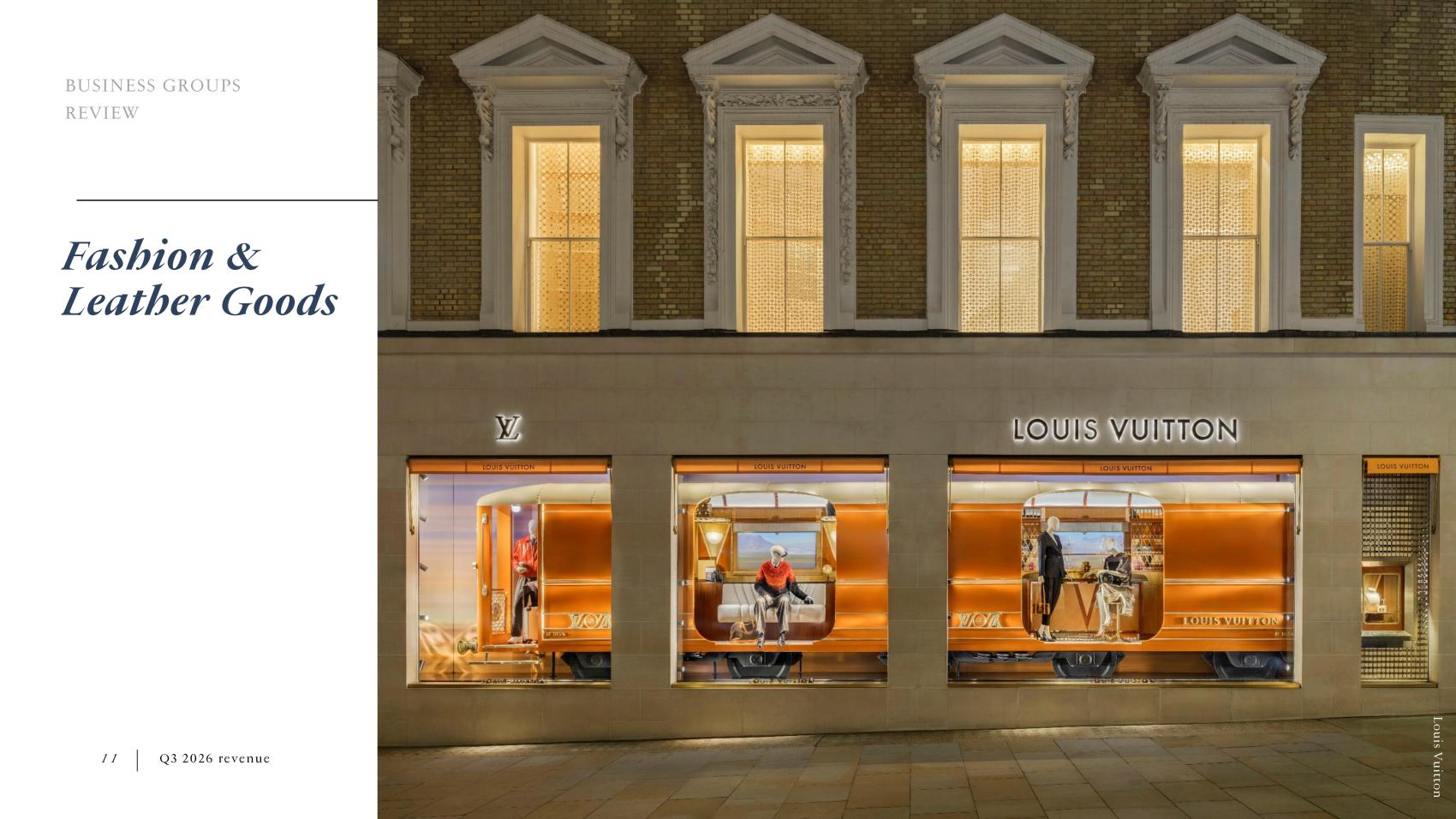
Louis Vuitton celebrated the 130th anniversary of the Monogram with a tribute to its iconic bags, reinterpreting the original canvas used in the brand's first trunks with the new Monogram Emblème jacquard; recently launched handbag products have been successful. The women's ready-to-wear collection designed by Creative Director Nicolas Ghesquière and the men's collection designed by Pharrell Williams both had good momentum. The brand continued to offer unique in-store experiences, such as the large LV The Place flagship in Seoul and new travel-inspired immersive spaces around the world; recently opened stores had good momentum.
In China, Louis Vuitton opened a new store in Changchun MixC in the third quarter, and Rodolphe Ozun said on the conference call that the new store had a good start. In response to market attention on Louis Vuitton's store closures in China, Cabanis said the brand opened a new store a week after a closure, and its total store area in China has not changed over the past 12 months; the brand will pragmatically adjust its store network dynamically when leases expire. As for more aggressive short-term measures such as price cuts, she said "we do not think that is advisable," because whatever is done must take into account the brand's desirability; Louis Vuitton will continue to seek a balance between brand elevation and recruiting new clients.
Christian Dior benefited from the huge success of designs by Creative Director Jonathan Anderson, with particularly strong demand for ready-to-wear and leather goods, especially women's handbags and ready-to-wear. Following the Osaka store in May, another House of Dior flagship opened on Via Montenapoleone in Milan in September.
Loro Piana performed excellently, presenting its latest ready-to-wear collection Solutions For, featuring items that combine functionality and creativity, in an immersive setting in Milan, and opened a new knitwear excellence center in Ghemme, Italy.
- Celine: The collections designed by Creative Director Michael Rider achieved great success, with growth accelerating; a silk-themed event was launched. Cabanis disclosed on the conference call that Celine footwear grew double digits, and the brand had strong momentum in the United States.
- Fendi: Creative Director Maria Grazia Chiuri launched her first collections, and her reinterpreted new Baguette bag was a success.
- Loewe: Co-Creative Directors Jack McCollough and Lazaro Hernandez continued to drive the creative renewal of the collections. The Amazona 180 was increasingly successful, and the Whisker bag was launched.
- Givenchy: Ready-to-wear designed by Creative Director Sarah Burton performed well.
- Rimowa: Strong growth, with the launch of Classic Titanium and Grid luggage.
- Berluti: Solid performance.
In addition, on September 1, LVMH completed the sale of Marc Jacobs to U.S. brand management company WHP Global.
——Perfumes & Cosmetics
The Perfumes & Cosmetics business saw revenue flat organically (0%) year-on-year in the first nine months at €5.922 billion (down 2% on a reported basis), with third-quarter organic growth of 1%. The division continued to pursue a highly selective retail strategy, and its heritage brands performed well. Rodolphe Ozun said on the conference call that fragrance was the main driver of the division's growth so far this year.
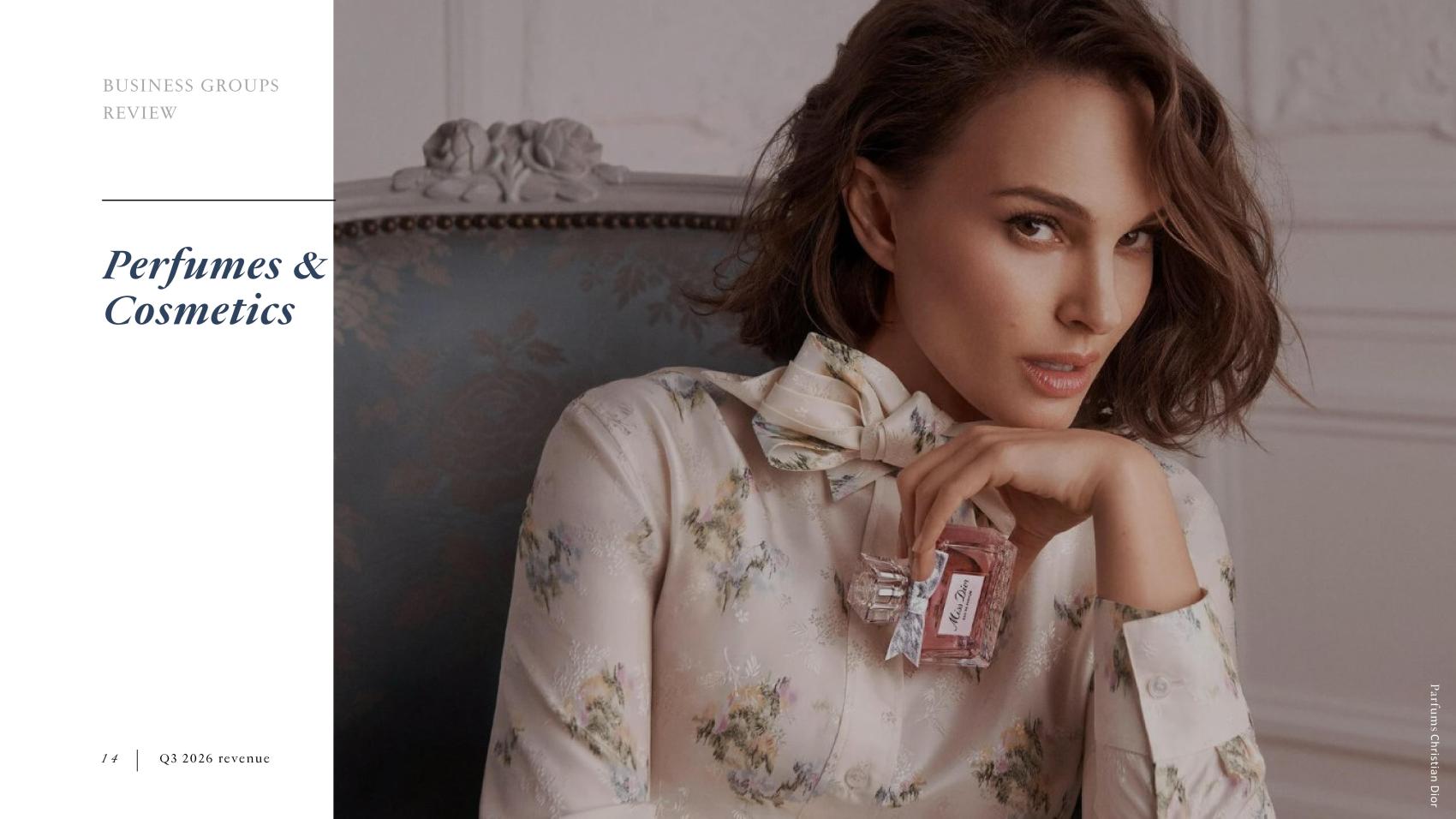
Parfums Christian Dior benefited from the launches of J'adore Intense, Sauvage Extrait and the eau de parfum version of Dior Addict; the La Collection Privée high-end fragrance line launched a new signature scent; Forever and Backstage drove good momentum in makeup and contributed to the brand's performance; the Prestige skincare line performed well.
Guerlain achieved substantial growth, thanks to the launch of L'Heure Bleue, the success of the L'Art & La Matière and Aqua Allegoria fragrance lines, and accelerating growth of the iconic Rouge G lipstick; the Orchidée Impériale skincare line also delivered good results.
- Parfums Givenchy: Focused on developing L'Interdit.
- Maison Francis Kurkdjian: Expanded the Oud collection.
- Acqua di Parma: Celebrated the brand's 110th anniversary with the launch of Cedro Virtuoso eau de parfum.
- Benefit: Launched the new The POREfessional Degunker cleansing line.
- Loewe Perfumes: Added new products to the Crafted collection.
——Watches & Jewelry
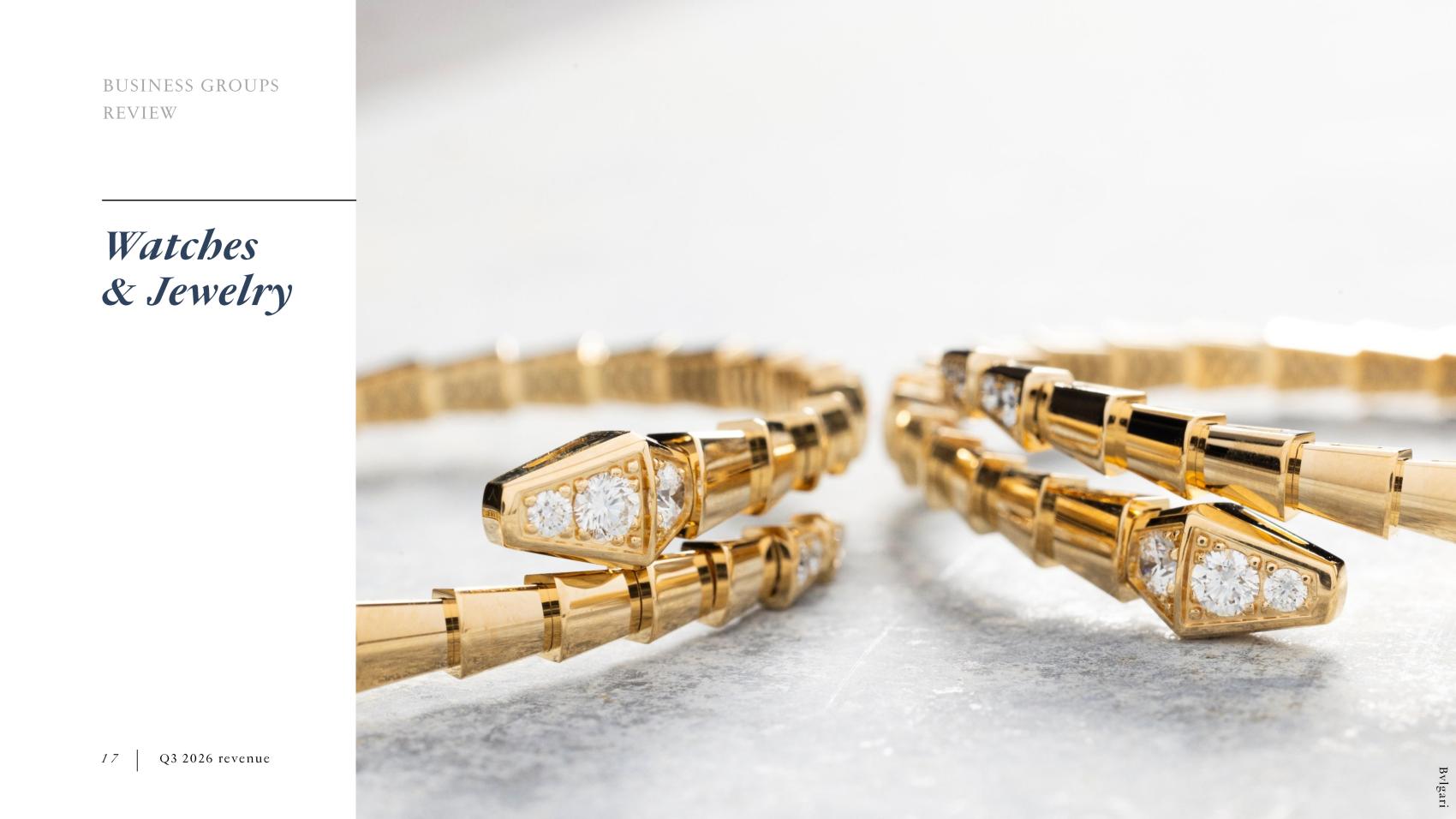
The Watches & Jewelry business saw revenue grow 8% organically year-on-year in the first nine months to €7.725 billion (up 4% on a reported basis), with third-quarter organic growth of 6% (11% in the second quarter). Growth was driven by a "very good" performance in the jewelry business.
Cécile Cabanis said on the conference call that the division's growth slowed in the third quarter due to, on the one hand, demand in China being dragged down by macroeconomic factors, and on the other hand, growth in the U.S. market also slowing between the second and third quarters, with Tiffany facing a high year-on-year comparable base; in addition, as gold prices stabilize, the contribution to growth from previous price increases in response to rising gold prices is expected to diminish.
Tiffany & Co. continued to successfully strengthen its iconic product lines—especially HardWear, Knot and Sixteen Stone—and continued to renovate its store network. The Blue Book 2026: Hidden Garden high jewelry collection, after its launch in New York, was presented in Venice for its autumn chapter and was well received by clients. The brand also held a Jean Schlumberger archive exhibition at the Musée des Arts Décoratifs in Paris (MAD Paris).
BVLGARI launched the new Eclettica high jewelry and fine watch collection, with the high jewelry collection setting record revenue; Bvlgari Vimini was successfully launched. The Kaleidos and Serpenti Infinito themed exhibitions toured globally, with the Kaleidos exhibition landing in Shanghai; a large-scale installation unveiled in New York paid tribute to its iconic Serpenti design.
Chaumet continued to develop the Bee de Chaumet collection, launching the first Bee de Chaumet high jewelry set made with traceable gold, as well as the new high jewelry collection A Journey Through Nature. Fred celebrated its 90th anniversary with the launch of the Monsieur Fred Golden Light high jewelry collection.
In watches, TAG Heuer maintained high visibility in Formula 1, especially as Title Partner of the Madrid race; Hublot collaborated with artist Jeff Koons and invited him as global brand ambassador; Zenith launched new models for the G.F.J. and Chronomaster collections.
——Selective Retailing
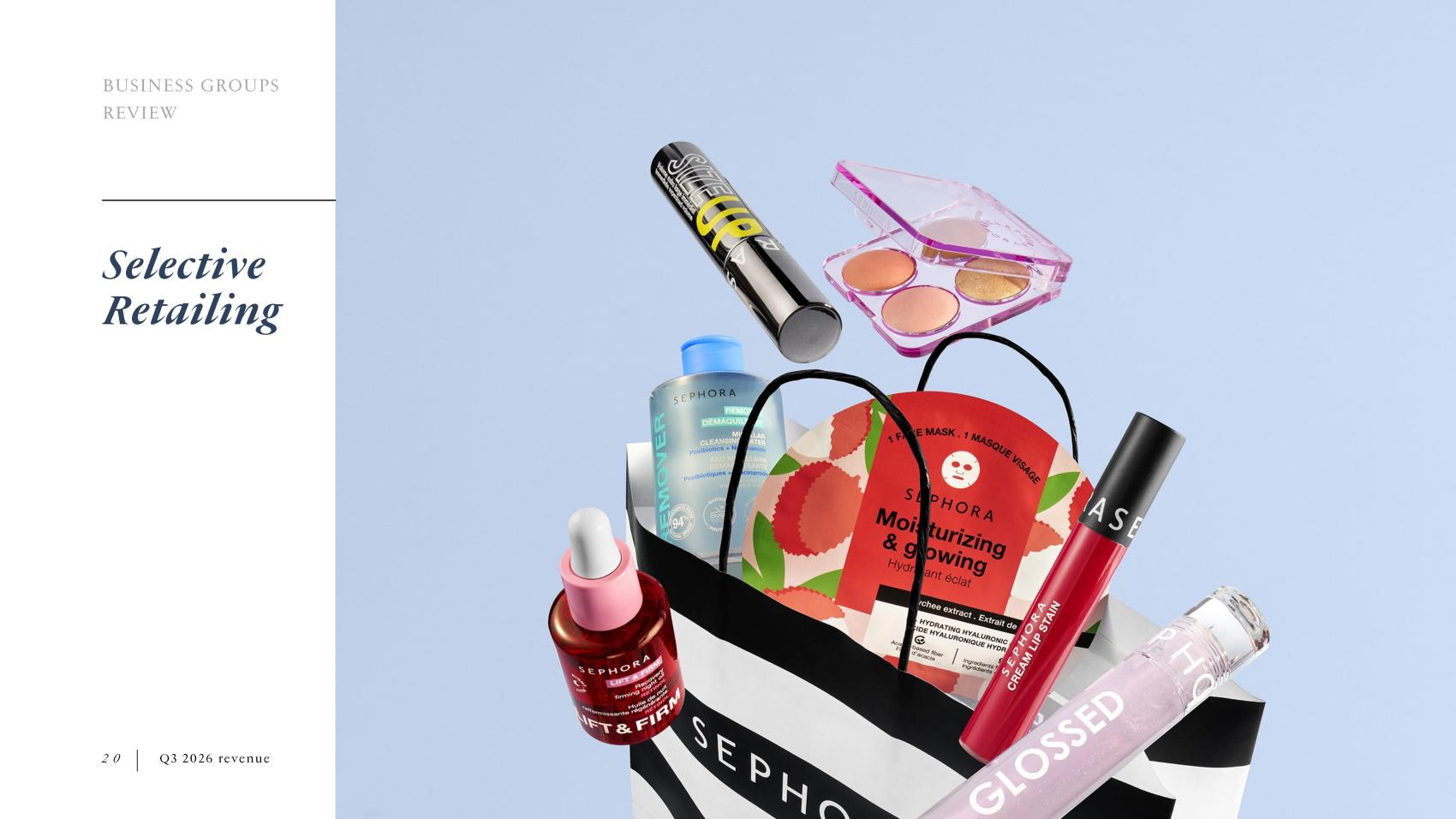
The Selective Retailing business saw revenue grow 6% organically year-on-year in the first nine months to €12.476 billion (down 1% on a reported basis, including a -4% scope effect and a -3% currency effect), with third-quarter organic growth of 8%. Rodolphe Ozun said on the conference call that the DFS asset sale brought a -7% scope effect to the division in the third quarter; Cabanis disclosed that Sephora's current same-store growth contributed half of its reported growth.
Sephora achieved strong revenue growth, further expanding market share in multiple countries and consolidating its global leadership. Growth was driven by its solid brand portfolio: many heritage brands continued to grow, and exclusive launch brands, including Rhode and several Chinese beauty (C-Beauty) brands, continued to gain traction. The retail network continued to expand, entering the Belgian and Croatian markets, and establishing a partnership with local retailer Marks & Spencer in the UK.
Le Bon Marché achieved revenue growth through its distinctive artistic and cultural events and launched a new loyalty program.
Most of DFS's business has been sold. Rodolphe Ozun said on the conference call that the latest was the August announcement of the sale of DFS's travel retail business at Abu Dhabi Zayed International Airport to Falic Group (parent company of U.S. duty-free retailer Duty Free Americas).
In the first nine months of the year, currency fluctuations had a -3% impact on LVMH's revenue, and changes in scope of consolidation had a -1% impact (from the sale of some DFS assets and the full sale of Marc Jacobs); in the third quarter, the currency impact was +2% and the scope impact was -2%. Group Chief Financial Officer Cécile Cabanis said on the conference call that this was the first time the currency impact turned positive after five consecutive quarters of negative impact.
Looking ahead, LVMH stated in its earnings report that despite the continued uncertain economic and geopolitical environment, the group remains confident and will continue to rely on the authenticity and quality of its products, outstanding retail capabilities and a flexible organizational structure to execute its strategy centered on continuously enhancing brand desirability. LVMH will leverage its strong brands and the talent of its teams to once again consolidate its global leadership in luxury in 2026.
In its earnings presentation, the group summarized its 2026 priorities in four areas: Desirability (continuous creative renewal, commitment to the highest quality), Creativity (strengthening iconic products, creating new in-store experiences), Agility (operational efficiency, entrepreneurial spirit) and Excellence (developing craftsmanship, targeted investment).
| Source: official earnings report, conference call
| Image source: group official website
| Editor: LuxeCO